QUICK ANSWER
What matters first.
Choose the area before the property, compare the final tax-inclusive price, check room size in square metres, and read the exact cancellation deadline. For ryokan, confirm whether the rate is per person and which meals are included.
- Choose the area before the property, compare the final tax-inclusive price, check room size in square metres, and read the exact cancellation deadline. For ryokan, confirm whether the rate is per person and which meals are included.
- Consumption tax and local accommodation tax
- Onsen bathing tax
- Service charge
EDITORIAL DECISION
The choice, before the detail.
Travellers choosing a base around the journeys they will repeat most often.
You care more about the cheapest room than station access, room layout or cancellation flexibility.
Check the exact map pin, nearest station exit, complete taxes and cancellation deadline before payment.
Book the right
Japan hotel

Compare the live room total before the best rates disappear.
SEE CURRENT RATESCHECK HOTEL PRICE · Browse hotel and ryokan options with our travel partner ↗The cheapest room is not always the cheapest stay in Japan. A hotel two stations closer, a room large enough to open two suitcases, or breakfast that starts before your day trip can be worth more than a small headline discount.
TL;DR: Choose the area before the property, compare the final tax-inclusive price, check room size in square metres, and read the exact cancellation deadline. For ryokan, confirm whether the rate is per person and which meals are included.
01How do you choose the right area to book in?
A useful hotel shortens the journeys you repeat. In Tokyo, being near the correct rail line usually matters more than being beside one famous sight. In Kyoto, a central bus stop may be less valuable than easy access to a subway or railway during crowded seasons.
Before booking, map three journeys: arrival from the airport, your earliest day trip and departure to the next city. If all three require multiple transfers, the low room rate may be a false saving.
Once the city is settled, the area guides do this work for you: where to stay in Tokyo and, inside it, hotels near Shinjuku Station; hotels near Kyoto Station and cheap hotels in Kyoto; hotels near Universal Studios Japan for an Osaka park day; and Kansai Airport hotels when a very early flight decides the night.
02What are the different types of Japanese accommodation?
- Best for
- Clean, efficient city stays
- Check carefully
- Compact room and bed size
- Best for
- Families and comfort
- Check carefully
- Service charge and breakfast rate
- Best for
- Onsen, meals and a cultural stay
- Check carefully
- Per-person pricing and meal time
- Best for
- Space and longer stays
- Check carefully
- Legal registration, stairs and reception
- Best for
- One light-travel night
- Check carefully
- Luggage storage and noise
| Type | Best for | Check carefully |
|---|---|---|
| Business hotel | Clean, efficient city stays | Compact room and bed size |
| Full-service hotel | Families and comfort | Service charge and breakfast rate |
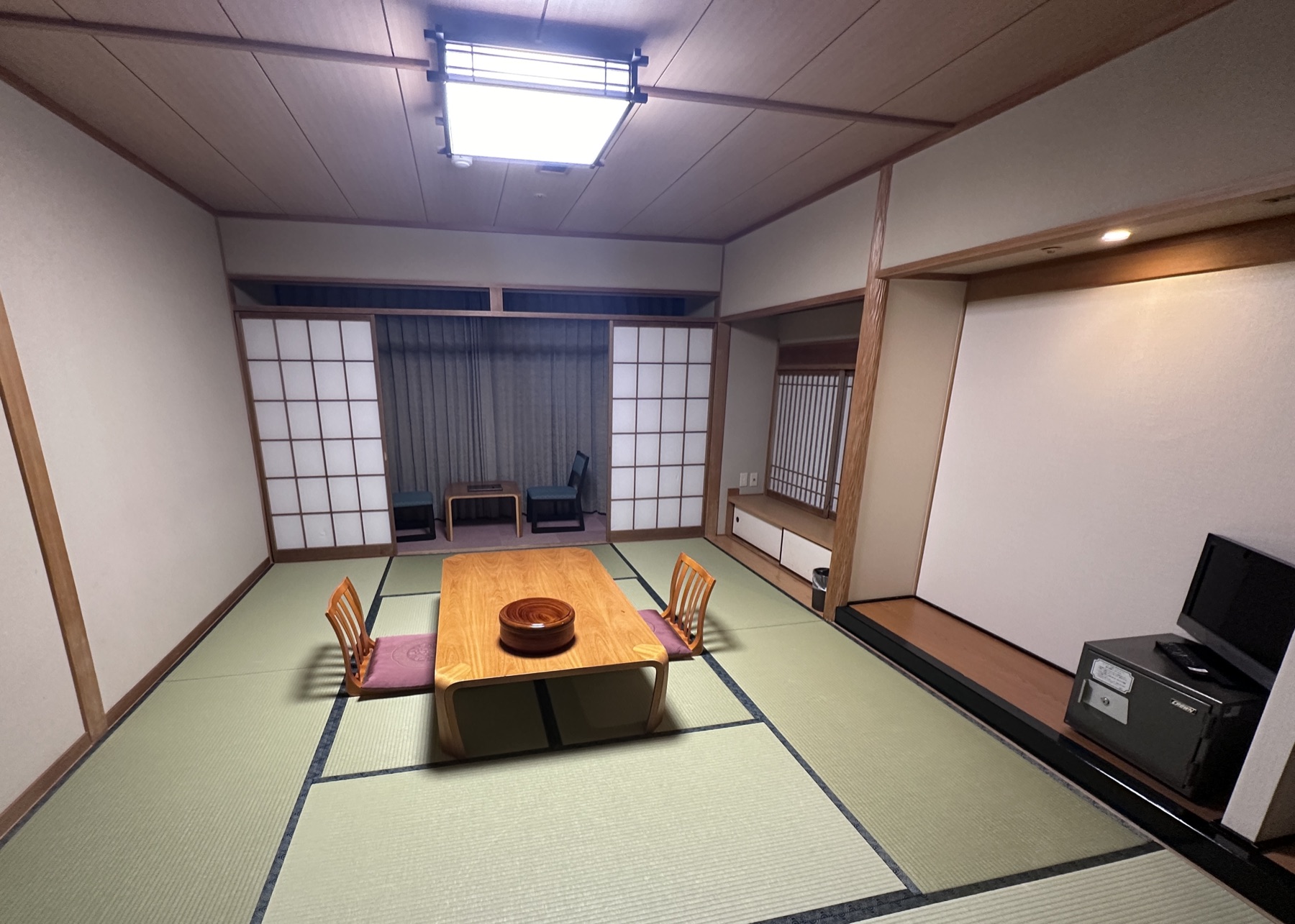
| Ryokan | Onsen, meals and a cultural stay | Per-person pricing and meal time |
| Machiya / apartment | Space and longer stays | Legal registration, stairs and reception |
| Capsule hotel | One light-travel night | Luggage storage and noise |
Business hotels often sit close to stations and provide everything needed in a small footprint. Ryokan are a complete experience rather than simply a room: dinner, breakfast, bathing and check-in time shape the stay.
03How do you compare the real total price?
Open the rate details before deciding. Look for:
- Consumption tax and local accommodation tax
- Onsen bathing tax
- Service charge
- Breakfast and dinner inclusion
- Charge for a child sharing existing bedding
- Luggage storage before check-in or after checkout
- Currency-conversion and card fees
Some Japanese cities levy a tiered accommodation tax. Onsen properties may collect a small bathing tax locally. A booking platform’s first screen may not display every locally payable charge.
04Why are Japanese hotel rooms so small?
Japanese city rooms can be compact. Read the floor area rather than trusting “double” or “deluxe.” Around 12–15 m² can feel tight with two large suitcases; a well-planned 20 m² room is noticeably easier for two travelers.
Also check whether “double” means one bed and “twin” means two. Japanese bathrooms are usually highly functional but compact. If accessibility matters, request exact doorway, bathroom and bed measurements from the property.
05How do cancellation and payment rules work?
“Free cancellation” always has a deadline and a time zone. Save the policy page and confirmation email. A pay-later reservation can still require a valid card and may become non-refundable near arrival.
Peak sakura, autumn foliage, Golden Week and New Year dates sell quickly. A sensible approach is to reserve a cancellable option early, then review the rate once your transport is fixed. Do not maintain duplicate bookings longer than necessary.
06What is different about booking a ryokan?
Ryokan prices are commonly shown per person and may include dinner and breakfast. Arriving late can mean losing dinner without a refund because meals are prepared to a schedule. Inform the property in advance about allergies; not every kitchen can remove dashi, soy or cross-contamination risks.
Confirm whether the onsen is shared, reservable or private in the room. “Private bath” can mean a bookable family bath rather than an ensuite hot spring.
07What should you check before you pay?
- Map the station and actual exit.
- Confirm room size, bed type and occupancy.
- Expand the price to show taxes and local fees.
- Read the cancellation deadline and time zone.
- Check reception hours and late-arrival rules.
- Confirm luggage storage or forwarding.
- Save the address in Japanese.
08FAQ
How early should I book hotels in Japan?
Book cancellable rooms early for cherry-blossom season, autumn foliage, Golden Week and New Year. Ordinary city dates usually allow more flexibility.
Are ryokan rates per room?
Many ryokan quote per person because meals are included. Check the occupancy and meal plan before comparing the rate with a hotel.
Can hotels forward luggage?
Many staffed hotels can send and receive luggage, but small properties and vacation rentals may not. Confirm both ends before shipping.