QUICK ANSWER
What matters first.
Stay near a Yamanote Line station. If you are deciding where to stay in Tokyo for a first trip, Shinjuku offers the best all-round base; Tokyo Station/Ginza is best for shinkansen day trips; Shibuya for nightlife and youth culture; Asakusa/Ueno for tradition and value; Shinagawa for early airport or Kyoto departures. Tokyo is enormous but the JR Yamanote loop line ties all five together.
- Stay near a Yamanote Line station. If you are deciding where to stay in Tokyo for a first trip, Shinjuku offers the best all-round base; Tokyo Station/Ginza is best for shinkansen day trips; Shibuya for nightlife and youth culture; Asakusa/Ueno for tradition and value; Shinagawa for early airport or Kyoto departures. Tokyo is enormous but the JR Yamanote loop line ties all five together.
- Roppongi: great art museums and nightlife, but weak train connections and inflated prices.
- Odaiba / Tokyo Bay: resort-style hotels far from the city's rhythm; fine for families prioritizing teamLab and malls.
- Anywhere off the rail network "because it was cheap" — taxi fares will erase the savings.
EDITORIAL DECISION
The choice, before the detail.
Travellers choosing a base around the journeys they will repeat most often.
You care more about the cheapest room than station access, room layout or cancellation flexibility.
Check the exact map pin, nearest station exit, complete taxes and cancellation deadline before payment.
Choose your
Tokyo base

Compare the live room total before the best rates disappear.
SEE CURRENT RATESCHECK HOTEL PRICE · Browse Tokyo hotels with our travel partner ↗Reviewed 23 July 2026 · Some links are affiliate links; recommendations are chosen for relevance, not commission.
TL;DR — Stay near a Yamanote Line station. If you are deciding where to stay in Tokyo for a first trip, Shinjuku offers the best all-round base; Tokyo Station/Ginza is best for shinkansen day trips; Shibuya for nightlife and youth culture; Asakusa/Ueno for tradition and value; Shinagawa for early airport or Kyoto departures. Tokyo is enormous but the JR Yamanote loop line ties all five together.
01Where should you stay in Tokyo for a first visit?
| Area | Best for | Price feel | Airport access | Shinkansen |
|---|---|---|---|---|
| Shinjuku | First trip, everything on foot | Mid–high | Direct buses/trains to both | Via Tokyo Stn (15 min) |
| Tokyo Station / Ginza | Day trips, polished hotels | High | Direct to Narita (N'EX) & Haneda | At your doorstep |
| Shibuya | Nightlife, shopping, energy | Mid–high | Direct to both | Via Shinagawa |
| Asakusa / Ueno | Old Tokyo, budget, families | Low–mid | Ueno→Narita direct (Skyliner) | Ueno station |
| Shinagawa | Transit ease, quiet nights | Mid | Fastest to Haneda | Shinkansen stop |
02Who should stay in Shinjuku?
The world's busiest station sounds intimidating, but staying beside it means direct lines everywhere, hundreds of restaurants from ¥500 ramen to skyscraper fine dining, Golden Gai's lantern-lit bars, and Shinjuku Gyoen park for slow mornings. West side (Nishi-Shinjuku) is calm and hotel-dense; east side is neon and nightlife; south side is polished malls.
If you have already settled on Shinjuku, the side and the exit matter more than the district name — best hotels near Shinjuku Station compares west, east and south on noise, walk time and room value.
03Is Tokyo Station or Ginza better for day trips?
If your plan leans on shinkansen day trips (Hakone via Odawara, Nikko via Ueno, Kyoto, Sendai), sleeping above Tokyo Station saves an hour daily. Ginza, one stop away, adds flagship shopping and Japan's densest concentration of Michelin stars. The area empties pleasantly at night.
If it comes down to these two, Tokyo Station or Shinjuku compares them on the trips you have actually booked rather than on general reputation.
04Is Shibuya a good area to stay in?
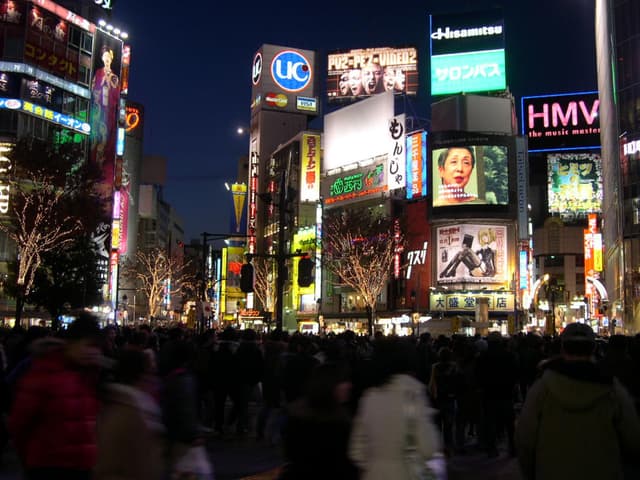
The scramble crossing, Center-gai's arcades, vinyl bars, late-night izakaya — Shibuya is Tokyo at maximum voltage, now with a crop of new high-rise hotels. Neighboring Ebisu and Daikanyama offer the same access with calmer evenings.
05Is Asakusa worth staying in for a first trip?
Asakusa wakes up early with Sensoji temple and goes quiet at night; hotels and hostels here cost noticeably less, many with Skytree views. Ueno adds museums, the park and the direct Skyliner to Narita. The trade-off: 20–30 minutes by metro to the western neon districts.
06When does Shinagawa make sense as a base?
Not an attraction in itself, but a shinkansen stop with the fastest Haneda access and reliable business hotels. Ideal for a first or last night before an early flight, or as a calm base for a Kyoto-bound trip.
07Which Tokyo areas should you avoid?
- Roppongi: great art museums and nightlife, but weak train connections and inflated prices.
- Odaiba / Tokyo Bay: resort-style hotels far from the city's rhythm; fine for families prioritizing teamLab and malls.
- Anywhere off the rail network "because it was cheap" — taxi fares will erase the savings.
08Where to stay in Tokyo FAQ
What is the best area to stay in Tokyo for first-timers?
Shinjuku. It balances transport (direct lines to almost everywhere, both airports and the day-trip gateways), an unmatched food scene, and hotels at every price. Choose the west side for quieter nights.
Should I stay in more than one Tokyo neighborhood?
For stays under a week, no — changing hotels costs half a day each move. Pick one Yamanote-line base and explore by train; consider a second base only for stays of 8+ nights.
Is Asakusa too far from everything?
No — it is 15–30 metro minutes from most sights, and its own evenings (a lit, empty Sensoji) are a reward. It suits travelers who prefer atmosphere and value over nightlife proximity.
How much do Tokyo hotels cost in 2026?
Roughly ¥9,000–15,000 for a clean business-hotel double, ¥20,000–40,000 mid-range, and ¥60,000+ for luxury. Cherry-blossom season (late March–early April), Golden Week and autumn weekends run 30–80% higher — book those months well ahead.
Are capsule hotels worth trying?
For one night, yes — modern capsules are clean, quiet and often ¥3,000–5,000 with great showers. Most are single-sex floors and store luggage; they suit solo travelers more than couples.
Which area is best with a JR Pass?
Tokyo Station, Ueno or Shinagawa — all shinkansen stops — so every activation day starts on a platform, not a metro transfer.