QUICK ANSWER
What matters first.
Hakone is the easiest Mt Fuji-area day trip from Tokyo. If you are choosing whether a Hakone day trip from Tokyo is worth it, the answer is usually yes: take the Odakyu line from Shinjuku, then follow the one-way Hakone Loop of mountain railway, cablecar, ropeway, Lake Ashi cruise and bus back. The ¥7,100 Hakone Free Pass covers almost all of it.
- Hakone is the easiest Mt Fuji-area day trip from Tokyo. If you are choosing whether a Hakone day trip from Tokyo is worth it, the answer is usually yes: take the Odakyu line from Shinjuku, then follow the one-way Hakone Loop of mountain railway, cablecar, ropeway, Lake Ashi cruise and bus back. The ¥7,100 Hakone Free Pass covers almost all of it.
- Around Hakone-Yumoto: easiest access, riverside baths.
- Gora: mid-loop location, art-museum access.
- Lake Ashi (Moto-Hakone/Togendai): Fuji-view rooms at sunrise.
EDITORIAL DECISION
The choice, before the detail.
Travellers who want one realistic day out with a clear route and an honest stopping point.
You want to cover every secondary sight or strongly dislike an early start.
Check the day’s first and last connections, weather and any reserved segment before leaving.
Hakone, in one
clear loop

Check today's dated ticket price and bundle value before you commit.
CHECK LIVE PRICECHECK TICKET PRICE · book the Hakone Free Pass ↗Reviewed 23 July 2026 · Editorial method: routes and prices checked against official operator information. Some links below are affiliate links; recommendations are chosen for relevance, not commission.
TL;DR — Hakone is the easiest Mt Fuji-area day trip from Tokyo. If you are choosing whether a Hakone day trip from Tokyo is worth it, the answer is usually yes: take the Odakyu line from Shinjuku, then follow the one-way Hakone Loop of mountain railway, cablecar, ropeway, Lake Ashi cruise and bus back. The ¥7,100 Hakone Free Pass covers almost all of it.
01Is Hakone worth a day trip from Tokyo?
Yes — Hakone packs volcanic scenery, Lake Ashi, open-air art, hot springs and (on clear days) Mt Fuji views into a single circular route that needs no backtracking and no car. It is the most beginner-friendly day trip from Tokyo. If you want an onsen ryokan stay, turn it into one night instead.
Good for: first-time visitors, art lovers (the Open-Air Museum), onsen fans, Fuji photographers. Less good for: travelers who hate crowds on autumn weekends, or anyone expecting a guaranteed Fuji view — the mountain hides in clouds roughly half the time, most often in summer.
02How do you get to Hakone from Tokyo?
Take the Odakyu line from Shinjuku Station. The comfortable Romancecar limited express runs direct to Hakone-Yumoto in about 85 minutes (seat reservation ¥1,200 each way on top of the pass). Regular express trains take about 2 hours with one easy change at Odawara and are fully covered by the Hakone Free Pass.
| Option | Time (Shinjuku → Hakone-Yumoto) | Cost with Free Pass | Best for |
|---|---|---|---|
| Odakyu Romancecar | ~85 min, direct | +¥1,200/way | Comfort, guaranteed seat |
| Odakyu express + transfer at Odawara | ~120 min | Included | Budget travelers |
| Shinkansen to Odawara + Tozan line | ~60 min to Odawara | Not covered (JR) | JR Pass holders |
Practical note: sit on the right side heading to Hakone for river views; buy Romancecar seats a few days ahead for weekend mornings.
03Is the Hakone Free Pass worth it?
For a standard day trip from Shinjuku, yes. The pass costs ¥7,100 (adult) / ¥1,100 (child) from Shinjuku and is valid 2 days. It bundles the Shinjuku round trip plus unlimited rides on the Tozan railway, cablecar, ropeway, Lake Ashi sightseeing cruise and local buses — doing the full loop on individual tickets costs more, and the pass also adds small discounts at many attractions.
Buy it at Odakyu counters in Shinjuku, via the Odakyu app, or before you fly.
Skip the pass if: you are coming from the Odawara side with a JR Pass (buy the ¥6,000 Odawara version instead), or you only plan to visit one spot such as the Open-Air Museum.
04The classic Hakone loop: a one-day itinerary
The loop works in either direction; clockwise (railway first, lake last) is described here because morning light is best at Owakudani and afternoon light is best on Lake Ashi.
- 8:00 — Shinjuku → Hakone-Yumoto. Romancecar departure; arrive ~9:30.
- 9:45 — Hakone Tozan Railway to Chokoku-no-Mori. A charming mountain railway with switchbacks.
- 10:00 — Hakone Open-Air Museum (90 min). Picasso pavilion, giant outdoor sculptures, a foot bath. Entry ~¥2,000 (small discount with the Free Pass).
- 12:00 — Cablecar + Ropeway to Owakudani. Float over the steaming volcanic valley; on clear days Mt Fuji appears to the northwest. Try a black egg (kuro-tamago), boiled in the sulphur springs.
- 13:30 — Ropeway down to Togendai, then the Lake Ashi "pirate ship" cruise (30 min) to Moto-Hakone.
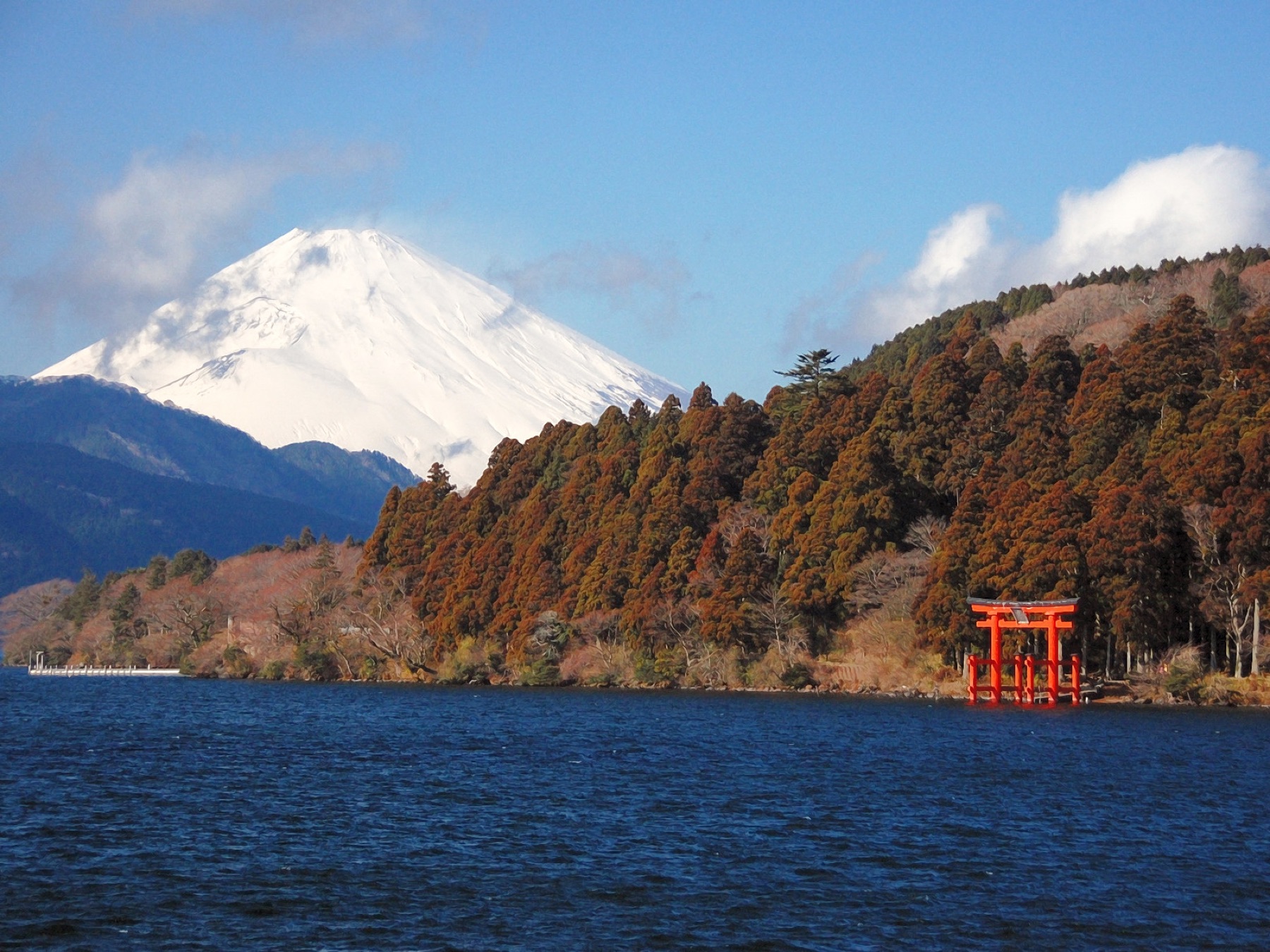
- 14:30 — Hakone Shrine. Walk 10 minutes along the lake to the famous "floating" red torii gate at the water's edge (expect a short queue for photos).
- 15:30 — Optional: Hakone Checkpoint & the old cedar-lined Tokaido road.
- 16:15 — Bus back to Hakone-Yumoto (~40 min, covered by the pass). Optional day-use onsen near the station before the train home.
- 18:00 — Romancecar back to Shinjuku.
05Hakone tour from Tokyo, or do the loop yourself?
Both work, and the honest answer depends on how much of the day you want to spend making decisions.
Do the loop yourself if you are comfortable reading a rail map, want to linger at the Open-Air Museum or Owakudani, and would rather not be tied to a coach departure. The Hakone Free Pass makes the whole round trip a single purchase, the route is signposted in English throughout, and nothing on the loop needs a reservation. This is the cheaper option and the one most independent travelers prefer.
Take a guided Hakone day tour from Tokyo if your dates are tight, you are travelling with people who tire of transfers, or you also want Mt Fuji's 5th Station on the same day — a combination that is genuinely awkward by public transport. A tour typically leaves Shinjuku in the morning, covers Owakudani and Lake Ashi, and returns by early evening, often with a Fuji stop the DIY loop cannot easily reach.
The trade-off is time on the ground: a tour spends more of the day on a coach and gives you 30–45 minutes at each stop, while the self-guided loop lets you decide where to spend the afternoon. If Hakone itself is the destination, do it yourself; if you want Hakone and Fuji in one day without planning it, take the tour.
· Hakone Free Pass or a guided tour? →
06When is the best time to visit Hakone?
Late March–May and late September–November offer the most comfortable weather and the highest chance of clear Fuji views; mid-October to mid-November adds spectacular autumn foliage around the ropeway. Avoid Golden Week (late April–early May) and expect rain from early June to mid-July. Winter is quiet, cheap and often crystal-clear — pack layers.
If you are timing the trip around blossom rather than around Fuji, Hakone sits slightly later than central Tokyo because of the altitude — see the Japan cherry blossom forecast for 2027 before fixing dates. For autumn, Hakone peaks around mid-November, roughly two weeks ahead of central Tokyo — the Japan autumn foliage guide has the region-by-region timing. For a second Kanto day trip with a completely different character, Nikko trades the volcano and lake for shrines and waterfalls, while Kamakura trades them for temples and the coast in half the travelling time.
07Should you stay overnight in Hakone?
If your budget allows one splurge night in Japan, spend it here. An onsen ryokan stay — kaiseki dinner, private or communal hot-spring baths, futon bedding — is the experience day-trippers miss. Book well ahead for October and weekends.
- Around Hakone-Yumoto: easiest access, riverside baths.
- Gora: mid-loop location, art-museum access.
- Lake Ashi (Moto-Hakone/Togendai): Fuji-view rooms at sunrise.
Filter by area rather than booking the first Hakone result — the three are far enough apart on the loop that the wrong one costs you an hour each way.
->
No time to plan? A guided Hakone day tour from Tokyo bundles transport and stops.
08Best next booking
After locking the Hakone day shape, most readers still need to solve either the Tokyo arrival chain or the Fuji-area trade-off.
09Hakone FAQ
Can you see Mt Fuji from Hakone?
Yes — the best viewpoints are the Owakudani ropeway section and the Lake Ashi cruise near Moto-Hakone. Visibility is best on clear winter and early-morning days; in summer the mountain is often hidden by haze and cloud.
How much does a Hakone day trip cost?
Budget roughly ¥12,000–15,000 per person from Tokyo: the ¥7,100 Hakone Free Pass, ¥2,400 for optional Romancecar seats, ~¥2,000 for the Open-Air Museum, plus lunch. An onsen ryokan night adds ¥25,000–60,000 per person including dinner and breakfast.
Is one day enough for Hakone?
One full day covers the classic loop (railway, ropeway, Owakudani, Lake Ashi cruise, Hakone Shrine) at a comfortable pace with one museum stop. Add a night in a ryokan if you want onsen time, a second museum, or the old Tokaido road walk.
Hakone or Kawaguchiko for a Fuji day trip?
Choose Hakone for variety (art, onsen, lake, volcano) and the easiest transport; choose Kawaguchiko for bigger, closer, more reliable Mt Fuji views. Photographers favor Kawaguchiko; first-timers usually enjoy Hakone more.
Do I need to book anything in advance?
Book Romancecar seats a few days ahead (essential for weekend mornings) and ryokan weeks-to-months ahead for autumn. The Free Pass, cruise and museums need no reservation.
Does the Hakone Free Pass cover the ropeway and pirate ship?
Yes. The pass includes unlimited rides on the Hakone Ropeway and the Lake Ashi sightseeing cruise, plus the Tozan railway, cablecar and designated local buses, for 2 or 3 consecutive days.