QUICK ANSWER
What matters first.
Plan around mid-November for Kyoto and late November for Tokyo. Japan's autumn colour moves in the opposite direction from cherry blossom: it starts in the mountains of Hokkaido in mid-September and finishes in the lowland south in early December. The season is far more forgiving than sakura — peak colour holds for two to three weeks rather than five days — but Kyoto in late November is the single most crowded travel week of the Japanese autumn.
- Plan around mid-November for Kyoto and late November for Tokyo. Japan's autumn colour moves in the opposite direction from cherry blossom: it starts in the mountains of Hokkaido in mid-September and finishes in the lowland south in early December. The season is far more forgiving than sakura — peak colour holds for two to three weeks rather than five days — but Kyoto in late November is the single most crowded travel week of the Japanese autumn.
- They are separately ticketed and separately timed. A temple that closes at 17:00 often reopens at 17:30 for a night session with its own admission. Your daytime ticket does not carry over.
- Dates are announced late. Most venues confirm their light-up window in September or October for the same autumn. Anything you read in August is last year's dates.
- They are not quiet. The famous ones — Kiyomizu-dera, Eikando, Kodaiji — draw long queues. The gain is not solitude; it is that an evening slot lets you use the crowded middle of the day for something else entirely.
EDITORIAL DECISION
The choice, before the detail.
Travellers planning around a seasonal window while keeping dates and destinations flexible.
Your itinerary depends on one exact forecast date many months ahead.
Treat forecast dates as ranges and recheck official updates close to departure.
Koyo, timed properly
See live departure dates and today's total before the popular slots go.
CHECK LIVE PRICECHECK TOUR PRICE · Compare Kyoto maple-viewing day tours ↗Updated 6 August 2026 · The 2026 peak-colour forecasts publish in mid-September; this guide is updated when they do. Some links are affiliate links; recommendations are chosen for relevance, not commission.
TL;DR — Plan around mid-November for Kyoto and late November for Tokyo. Japan's autumn colour moves in the opposite direction from cherry blossom: it starts in the mountains of Hokkaido in mid-September and finishes in the lowland south in early December. The season is far more forgiving than sakura — peak colour holds for two to three weeks rather than five days — but Kyoto in late November is the single most crowded travel week of the Japanese autumn.
01When does autumn foliage peak in Japan?
Cherry blossom sweeps south to north in about six weeks. Autumn colour, or koyo, does the reverse — north to south, and high altitude to low — over nearly three months.
| Region / City | Typical peak colour |
|---|---|
| Daisetsuzan, central Hokkaido | Mid–late September |
| Sapporo | Mid–late October |
| Nikko (Lake Chuzenji, Irohazaka) | Mid–late October |
| Sendai / Tohoku | Late October–early November |
| Hakone | Mid November |
| Kanazawa (Kenrokuen) | Mid–late November |
| Kyoto | Mid November–early December |
| Tokyo | Late November–early December |
| Hiroshima / Miyajima | Mid–late November |
| Fukuoka / Kyushu | Late November–early December |
Two things follow from this table, and they are the whole planning problem in miniature.
First, altitude matters as much as latitude. Nikko peaks a full month before Tokyo despite being 140km away, because Lake Chuzenji sits at 1,270m. If your dates are fixed and the lowlands are still green, the fix is usually to go up rather than north.
Second, you can chase the colour. A two-week November trip that starts in Tokyo, moves to Kyoto and ends in Kyushu will follow the peak almost exactly. Very few sakura itineraries work that way.
Official forecasts from Japan's weather companies begin publishing in mid-September and sharpen every week or two through the season.
Peak-season tours book out early, and the evening ones — illuminated temples and the Sagano railway after dark — go first.
Deciding between the two obvious day trips from Tokyo? They peak a month apart — Nikko or Hakone in autumn settles it by date.
02How to read a Japanese foliage forecast
The 2026 forecasts are not out yet. The first national release usually lands in mid-September, from the Japan Meteorological Corporation and Weathernews, and both then reissue every week or two until the season ends. This page is updated when they publish.
When they do, the map will be labelled in Japanese, and three terms carry all the meaning:
- Reading
- irozuki-hajime
- What it means for your dates
- Colour starting. Roughly 10–30% turned. Photogenic in patches, not yet the postcard.
- Reading
- migoro
- What it means for your dates
- Best viewing. This is the window you are booking for.
- Reading
- rakuyo
- What it means for your dates
- Leaves falling. Still atmospheric on the ground, past peak in the canopy.
| Japanese | Reading | What it means for your dates |
|---|---|---|
| 色づき始め | irozuki-hajime | Colour starting. Roughly 10–30% turned. Photogenic in patches, not yet the postcard. |
| 見頃 | migoro | Best viewing. This is the window you are booking for. |
| 落葉 | rakuyo | Leaves falling. Still atmospheric on the ground, past peak in the canopy. |
Two habits make the forecasts far more useful.
Read the trend, not the single date. A forecast issued in September is a long-range estimate and will move. What matters is the direction it moves across successive releases: if consecutive updates keep pushing Kyoto later, plan for the back half of your window rather than the front.
Check the specific site, not the city. Kyoto is not one date. Takao and Ohara in the northern hills turn a week or more before the city-centre temples, and Arashiyama sits between them. A city-level migoro label is an average across places that can be ten days apart.
A useful rule when the forecast disagrees with your fixed dates: colour that has not arrived at low altitude has almost always already arrived higher up. Going up a mountain is faster than moving your flights.
03Is autumn a better time to visit than cherry blossom season?
For most first-time visitors, yes — with one caveat.
Autumn wins on duration. Peak colour at a given spot holds for roughly two to three weeks, and a single tree turns gradually rather than dropping in a weekend. A trip planned three days off from ideal is still a good trip. The equivalent error in sakura season means bare branches.
Autumn wins on weather. October and November are the driest, clearest months of the Japanese year. This is also when Mt Fuji is most reliably visible, which matters if a Fuji view is on the list.
Autumn wins on cost, but only outside the peak fortnight. Hotel rates in mid-November Kyoto now rival early-April Kyoto.
The caveat is crowds in one specific place: Kyoto from roughly 15 November to 5 December. Domestic and international demand land at the same time, temple gardens have fixed capacity, and the famous spots stop being pleasant by mid-morning.
04Where should you actually go?
Kyoto — the classic, if you handle the timing
Kyoto is the reason many people come in November, and the colour genuinely deserves it. Tofukuji's valley of maples, Eikando's illuminated evenings and the Arashiyama hills are the images that sell the season.
The practical advice is unglamorous: be at the gate when it opens, or go after 15:00. Tofukuji and Eikando between 10:00 and 14:00 in late November are shuffling queues, not gardens. Several temples run evening illuminations with separate tickets, and these are often the better experience.
If the famous names feel too crowded, the northern Ohara valley and the Takao area peak slightly earlier and hold a fraction of the visitors.
→ Where to stay in Kyoto: Station or Gion? · Kansai Airport to Kyoto
Nikko — the best autumn day trip from Tokyo
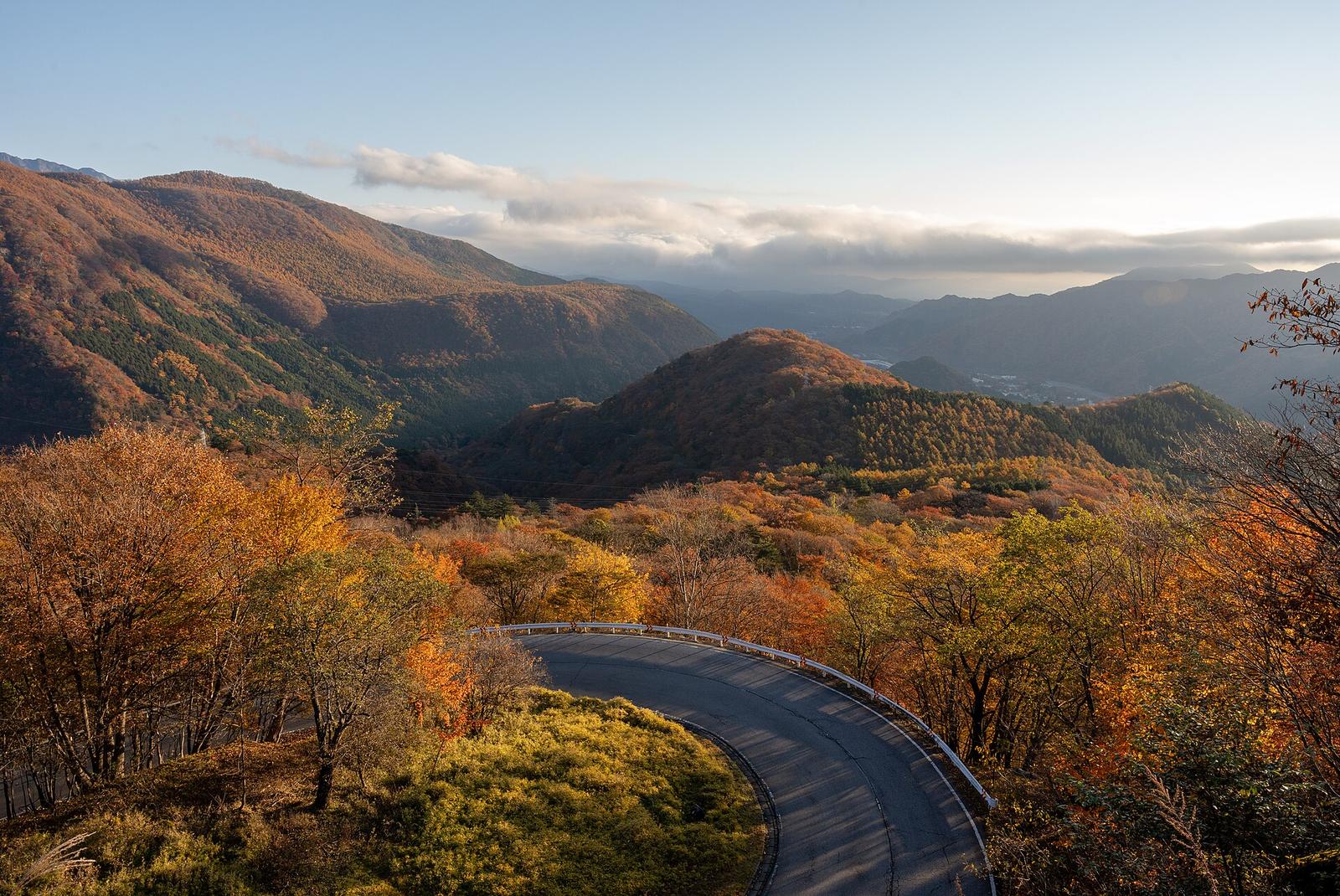
Nikko peaks in mid-to-late October, a month before Tokyo, which makes it the answer for anyone visiting too early for lowland colour. The Irohazaka switchback road, Lake Chuzenji and Kegon Falls sit high enough to turn while Tokyo is still green.
The trade-off is traffic. Irohazaka is a famous bottleneck on October weekends; go midweek or start very early.
Hakone — colour plus a Fuji view
Hakone peaks around mid-November and pairs autumn colour with the clearest Fuji-viewing weather of the year. The ropeway section above Owakudani gives you both at once, and the Hakone Free Pass covers the whole loop.
→ Hakone day trip from Tokyo · Hakone Free Pass or a guided tour?
Tokyo — later and easier than people expect
Tokyo's colour arrives late November into early December, which surprises visitors who assume the capital leads. Rikugien's illuminated garden evenings and the ginkgo avenue at Meiji Jingu Gaien are the two set pieces; the ginkgo in particular turns a startling uniform yellow and photographs well even in flat light.
Because Tokyo peaks last, a trip that arrives too late for Kyoto can still land perfectly in Tokyo.
Kanazawa — the quieter garden option
Kenrokuen in mid-to-late November offers one of Japan's three great gardens at a fraction of Kyoto's density, with the yukitsuri rope cones going up for winter at roughly the same time.
05What is momiji, and what is the yellow one?
Two different trees do most of the work, and knowing which is which helps you read forecasts.
Momiji is Japanese maple — the small, deeply cut leaf that turns scarlet and crimson. This is what temple gardens are planted for and what koyo forecasts track.
Ichou is ginkgo — the fan-shaped leaf that turns a single saturated yellow. Ginkgo lines city avenues rather than temple gardens, peaks slightly later than maple, and is why Tokyo's best autumn scenery is often a street rather than a garden.
Koyo (紅葉) covers both. If a forecast map says a spot is at mikoro (見頃), it is at viewing peak.
06How far ahead should you book?
Less far than sakura, but further than you would think for the specific fortnight.
For Kyoto between 15 November and 5 December, book accommodation four to six months out. This window now behaves like cherry blossom season: rates roughly double and the well-located mid-range hotels go first.
For everywhere else, and for Kyoto outside that window, two to three months is usually comfortable.
The date-flexible strategy that works: book the hotel early because that is the scarce resource, and leave the day-by-day itinerary loose. Unlike sakura, you will not need to rebook a whole trip because the forecast moved — you will just reorder your days.
-> What each Kyoto price band actually buys · Booking hotels in Japan without location mistakes ·
07Getting around in peak season
Autumn is the one season where a guided day tour can genuinely beat doing it yourself. The best foliage spots — Irohazaka, Lake Chuzenji, the Kyoto northern hills — are exactly the places where road traffic and limited buses turn a simple plan into a long day.
If you are moving between Tokyo, Kyoto and beyond, price the rail arithmetic before assuming a pass is correct; autumn itineraries often involve fewer long hops than people plan for.
08Autumn illuminations, and why they change the plan
Between roughly early November and early December, many Kyoto temples and several Tokyo gardens run evening light-ups — the grounds stay open after dark with the maples lit. They are the single most effective crowd tool the season offers, and most visitors never build them into the itinerary.
Three things worth knowing before you plan around them:
- They are separately ticketed and separately timed. A temple that closes at 17:00 often reopens at 17:30 for a night session with its own admission. Your daytime ticket does not carry over.
- Dates are announced late. Most venues confirm their light-up window in September or October for the same autumn. Anything you read in August is last year's dates.
- They are not quiet. The famous ones — Kiyomizu-dera, Eikando, Kodaiji — draw long queues. The gain is not solitude; it is that an evening slot lets you use the crowded middle of the day for something else entirely.
The practical shape of a Kyoto peak-season day: a temple at opening, the middle of the day somewhere that does not depend on foliage, and an illumination after dark. That is three experiences out of a day that most people spend queuing for one.
Tokyo's version is smaller but real — Rikugien is the best known, and the Meiji Jingu Gaien ginkgo avenue stays striking into December.
09If you arrive too early or too late
Both are recoverable, which is the quiet advantage autumn has over cherry blossom.
Too early — the lowlands are still green. Go up. Hakone, Nikko's Lake Chuzenji, the Kyoto northern hills and Koyasan all turn well before the cities they sit near. A day trip usually solves it without touching your hotel bookings.
Too late — the maples have dropped. Two things still work. Ginkgo holds yellow noticeably later than maple holds red, so avenues like Meiji Jingu Gaien and Osaka's Midosuji stay worthwhile into December. And rakuyo itself photographs well: moss gardens and temple steps under fallen red leaves are a distinct look, not a consolation prize.
Either way, go south. Kyushu and Hiroshima run one to two weeks behind Kyoto, so a late trip that adds Miyajima often catches colour the main island has already lost.
→ Hiroshima and Miyajima in one day · Hakone day trip: pass or tour?
10A November route that follows the colour
If you have ten days in mid-to-late November and want the season rather than one city:
- Days 1–3 — Kyoto. Arrive for the front edge of peak. Early mornings at Tofukuji or Eikando, afternoons in the quieter north.
- Day 4 — Nara or Osaka. A lower-pressure day while Kyoto's crowds are heaviest.
- Days 5–6 — Kanazawa. Kenrokuen at peak, with room to breathe.
- Day 7 — Hakone. Colour and, on a clear day, Fuji.
- Days 8–10 — Tokyo. Arrive as the capital turns. Rikugien in the evening, Meiji Jingu Gaien for the ginkgo.
This runs roughly with the peak rather than against it, and each move buys a few more days of colour.
11Japan autumn foliage FAQ
When is the best time to see autumn leaves in Japan?
Mid-November for Kyoto and Kanazawa, late November to early December for Tokyo, and mid-to-late October for mountain areas such as Nikko and Hakone. Hokkaido peaks earliest, from mid-September.
Is autumn foliage in Japan better than cherry blossom?
It is easier to plan. Peak colour lasts two to three weeks rather than five days, the weather is drier and clearer, and mistimed dates rarely ruin a trip. Cherry blossom remains the more famous spectacle and carries more atmosphere; autumn is the more reliable trip.
How long does peak autumn colour last?
About two to three weeks at a given location, with the best week in the middle. Individual trees hold colour far longer than cherry blossom holds petals.
Is Kyoto too crowded for autumn leaves?
Between roughly 15 November and 5 December, the famous temples are extremely crowded from mid-morning onward. Arriving at opening, staying past 15:00, choosing evening illuminations, or shifting to Ohara and Takao all solve most of it.
Do I need to book hotels far in advance for autumn?
For Kyoto in the peak fortnight, four to six months. Elsewhere, two to three months is normally enough. Hotels are the scarce resource; trains and temples are not.
Will a typhoon ruin the autumn leaves?
It can strip leaves locally, mainly in September and early October. By mid-November, when most foliage travel happens, typhoon risk has largely passed.
What is the difference between momiji and koyo?
Koyo is the season and the phenomenon of leaves changing colour. Momiji is the Japanese maple specifically — the red one most associated with temple gardens. Searches for a momiji forecast and a koyo forecast return the same maps.
When do the 2026 autumn foliage forecasts come out?
The first national forecasts usually publish in mid-September, from the Japan Meteorological Corporation and Weathernews, then update every week or two through the season. Anything more specific than a typical-year range before mid-September is an estimate, not a forecast.
What does migoro mean on a foliage map?
Migoro (見頃) is peak viewing — the window worth booking. Irozuki-hajime (色づき始め) means colour is only starting, and rakuyo (落葉) means leaves are already falling.
Are the Kyoto autumn illuminations worth it?
Yes, but for scheduling rather than solitude. They are separately ticketed evening sessions and still busy, though they free the crowded middle of the day for something else. Venues confirm their dates in September or October, so check the current year rather than last year's window.
Which Kyoto spots turn first?
The northern hills — Takao and Ohara — run roughly a week or more ahead of the city-centre temples, with Arashiyama in between. A single city-wide date hides a spread of about ten days.