QUICK ANSWER
What matters first.
Kamakura is the easiest half-day escape from Tokyo, and the only one that combines major temples with a beach. The JR Yokosuka line runs direct from Tokyo Station in about 55 minutes for ¥940, no reservation needed and covered by the JR Pass. Give it five to six hours: the Great Buddha, one or two temples, the Enoden coastal railway and lunch. It is flatter, cheaper and far less committing than Hakone or Nikko.
- Kamakura is the easiest half-day escape from Tokyo, and the only one that combines major temples with a beach. The JR Yokosuka line runs direct from Tokyo Station in about 55 minutes for ¥940, no reservation needed and covered by the JR Pass. Give it five to six hours: the Great Buddha, one or two temples, the Enoden coastal railway and lunch. It is flatter, cheaper and far less committing than Hakone or Nikko.
EDITORIAL DECISION
The choice, before the detail.
Travellers who want one realistic day out with a clear route and an honest stopping point.
You want to cover every secondary sight or strongly dislike an early start.
Check the day’s first and last connections, weather and any reserved segment before leaving.
Kamakura in half
a day
See live departure dates and today's total before the popular slots go.
CHECK LIVE PRICECHECK TOUR PRICE · Compare Kamakura and Enoshima day tours from Tokyo ↗Reviewed 31 July 2026 · Fares, opening hours and seasonal rules change. Verify before travel. Some links are affiliate links; recommendations are chosen for relevance, not commission.
TL;DR — Kamakura is the easiest half-day escape from Tokyo, and the only one that combines major temples with a beach. The JR Yokosuka line runs direct from Tokyo Station in about 55 minutes for ¥940, no reservation needed and covered by the JR Pass. Give it five to six hours: the Great Buddha, one or two temples, the Enoden coastal railway and lunch. It is flatter, cheaper and far less committing than Hakone or Nikko.
01Is Kamakura worth a day trip from Tokyo?
Yes, and it is the day trip that asks the least of you. There is no pass to calculate, no ropeway that closes in bad weather and no 5:00 start. Trains leave every ten minutes or so, and if the day goes badly you are an hour from Tokyo.
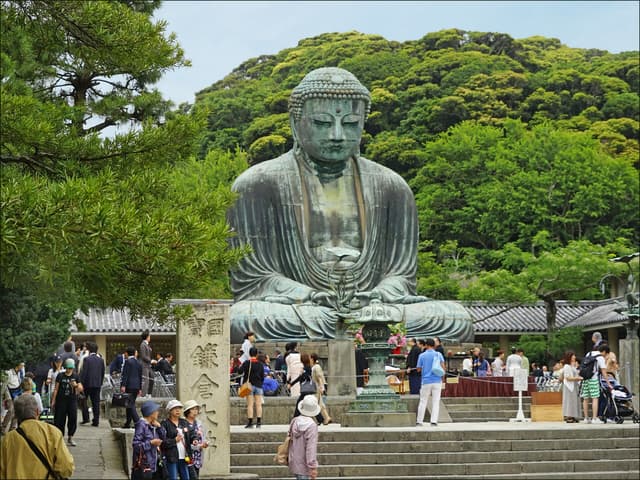
Kamakura was Japan's political capital from 1185 to 1333, and the temples founded in that period are still standing and still functioning. What makes it different from Kyoto is the setting: the town sits in a bowl of wooded hills that opens onto the Pacific, so a single day can hold a Zen garden, an 11-metre bronze Buddha and a beach sunset.
Good for: first-time visitors short on days, travellers who want temples without a Kyoto trip, hikers, anyone travelling with a JR Pass. Less good for: anyone hoping for solitude on an autumn weekend, or expecting Kyoto's scale — Kamakura is a town, not a city of temples.
02How do you get to Kamakura from Tokyo?
| Route | Time | Cost (one way) | Notes |
|---|---|---|---|
| JR Yokosuka line from Tokyo Station | ~55 min, direct | ¥940 | Simplest; covered by JR Pass |
| JR Shonan-Shinjuku line from Shinjuku | ~60 min, direct | ¥940 | Better if you are staying west |
| Odakyu line from Shinjuku to Fujisawa | ~55 min | ¥640 | Enters via the Enoden from the coast end |
The Yokosuka line is the default. Sit on the right-hand side after Ofuna for the first glimpse of the hills.
A note on direction. Most visitors start at Kamakura Station and work outward. Starting instead at Kita-Kamakura, one stop earlier, is the better plan: the great Zen temples cluster there, you walk downhill into town, and you arrive at the Great Buddha in the afternoon rather than fighting the morning coach groups.
03Do you need the Enoden, and is a pass worth it?
The Enoden is the single-track coastal railway between Kamakura and Fujisawa, and it is an attraction in its own right — it runs between houses, crosses the beach road and gives the view that sells Kamakura in photographs.
The Enoshima-Kamakura Freepass (about ¥1,640 from Shinjuku, Odakyu) covers the round trip from Tokyo plus unlimited Enoden rides. It is worth it if you approach on the Odakyu line and plan to hop on and off along the coast. If you arrive by JR with a JR Pass, buy individual Enoden tickets instead — you will probably only ride it twice.
The honest answer for most day-trippers: skip the pass, ride the Enoden once from Hase to Kamakura, and spend the difference on lunch.
04A one-day Kamakura route that works
- 9:30 — Kita-Kamakura. Arrive one stop before Kamakura.
- 9:40 — Engakuji. Directly outside the station. A large Zen complex that most tour groups skip. ~¥500.
- 10:40 — Kenchoji. Japan's oldest Zen training monastery, and the start of the Ten'en hiking trail if you want hills. ~¥500.
- 12:00 — Walk down into Kamakura town. Twenty minutes downhill, ending at Tsurugaoka Hachimangu, the shrine at the head of the town's main avenue. Free.
- 12:45 — Lunch on Komachi-dori, the covered shopping street beside the station. Shirasu-don (whitebait over rice) is the local dish.
- 14:00 — Enoden to Hase. Three stops, ¥200, and the best short railway ride in the Tokyo area.
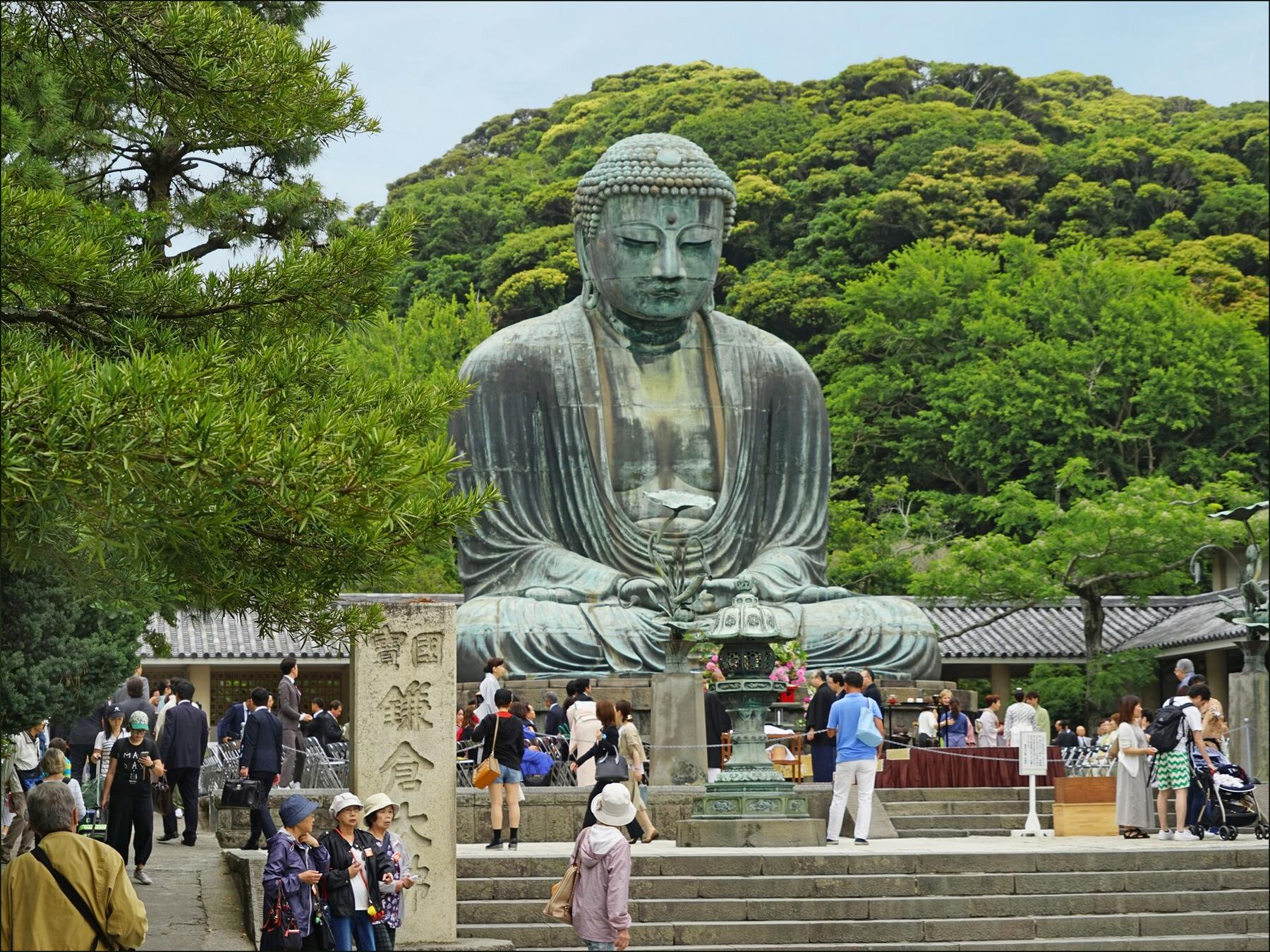
- 14:15 — Kotoku-in and the Great Buddha. The 11.3-metre bronze Amida has sat in the open air since a tsunami took its hall in 1498. ¥300, plus ¥50 to step inside the statue.
- 15:00 — Hasedera. Five minutes' walk, and the better temple of the two: hillside gardens, a sea view terrace and a cave shrine. ~¥400.
- 16:00 — The beach, or Enoshima. Walk ten minutes to Yuigahama beach, or ride the Enoden to the end for Enoshima island.
- 17:30 — Train back to Tokyo.
05Kamakura or Nikko or Hakone?
These are the three classic day trips from Tokyo, and they are genuinely different rather than interchangeable.
Choose Kamakura for temples, the coast and the lowest effort. It is the cheapest, the flattest, the most frequent by train and the easiest to cut short.
Choose [Hakone](/day-trips/hakone-from-tokyo) for Mt Fuji views, a volcanic valley and an onsen finish. It is the most scenic and the most structured — a fixed loop of trains, cablecar, ropeway and boat.
Choose [Nikko](/day-trips/nikko-from-tokyo) for the most spectacular shrine architecture in Japan and mountain scenery. It is the longest day and the one most worth turning into an overnight.
If you have one day, most first-time visitors get more out of Hakone. If you have one half day, or you have already used your energy on Tokyo, Kamakura is the better answer.
06When is the best time to visit Kamakura?
June is Kamakura's signature month: hydrangeas at Meigetsuin and Hasedera draw crowds large enough that Hasedera issues timed entry tickets. Arrive at opening or skip the weekend entirely.
Late November to early December brings autumn colour, roughly two weeks later than Nikko because Kamakura sits at sea level — see the Japan autumn foliage guide for the wider timing.
Late March to early April adds cherry blossom along the Dankazura avenue. Summer is beach season, which changes the character of the town completely: beach huts, crowds and a genuinely good swim.
Winter is the quiet season and, on a clear day, the best one for the coastal views.
07Practical notes that save the day
Wear shoes you can walk five kilometres in and take off easily — temple halls require removing them. Most temples close at 16:30 or 17:00, earlier in winter, so the Great Buddha is a bad thing to leave until late. Bring cash: small temples and the Enoden are not reliably card-friendly, though an IC card works on the trains.
The one genuine mistake is treating Kamakura like a checklist. Three temples done properly beat seven done at a jog, and the walk between Kita-Kamakura and the town is half the pleasure.
→ How IC cards work in Japan · Is the JR Pass worth it?
08Kamakura FAQ
How long do you need in Kamakura?
Five to six hours covers the Zen temples at Kita-Kamakura, the town, the Great Buddha and Hasedera at a comfortable pace. Three hours is enough for the Great Buddha, Hasedera and the beach.
Is the Great Buddha in Kamakura worth seeing?
Yes. It is the second-tallest bronze Buddha in Japan, it has stood in the open air since 1498, and unlike the larger Nara Buddha you can walk inside it for ¥50. Allow 30 minutes, and pair it with Hasedera five minutes away.
Can you do Kamakura and Enoshima in one day?
Yes, and the Enoden makes it easy. Do Kamakura's temples in the morning, ride to Enoshima in the afternoon and stay for sunset over the island. It makes for a long but well-balanced day.
Is Kamakura better than Nikko?
For a short, low-effort day near the coast, yes. For dramatic shrine architecture and mountain scenery, Nikko is stronger. Kamakura is roughly half the travel time and half the cost.
Do I need a pass for Kamakura?
Usually not. A JR Pass covers the train from Tokyo; without one, ¥940 each way plus a couple of ¥200 Enoden rides costs less than most passes. The Enoshima-Kamakura Freepass only pays off if you arrive via Odakyu and ride the coast repeatedly.
Is Kamakura crowded?
Weekends in June (hydrangea season) and November (autumn colour) are genuinely busy, and Hasedera can require timed entry. Weekday mornings anywhere outside those windows are calm.
Can you swim at Kamakura?
Yes, at Yuigahama and Zaimokuza beaches during the official July–August season, when lifeguards and beach huts operate. Outside those months the beaches are pleasant to walk but unsupervised.