QUICK ANSWER
What matters first.
Yes, tattooed travelers can enjoy onsen in Japan, but not at every bath. Many public onsen and hotel large baths still refuse visible tattoos; the reliable workarounds are private rental baths (*kashikiri*), ryokan rooms with their own open-air bath, tattoo-friendly bathhouses, and — for small tattoos — cover stickers. Plan the bath before you book the town and the problem disappears.
- Yes, tattooed travelers can enjoy onsen in Japan, but not at every bath. Many public onsen and hotel large baths still refuse visible tattoos; the reliable workarounds are private rental baths (*kashikiri*), ryokan rooms with their own open-air bath, tattoo-friendly bathhouses, and — for small tattoos — cover stickers. Plan the bath before you book the town and the problem disappears.
EDITORIAL DECISION
The choice, before the detail.
First-time visitors who want a practical setup before arrival and fewer decisions on day one.
You already have a working Japan-specific setup and only need a live official rule.
Verify time-sensitive rules with the named operator or authority immediately before relying on them.
Onsen with
tattoos, sorted
Compare the live room total before the best rates disappear.
SEE CURRENT RATESCHECK HOTEL PRICE · Browse ryokan and onsen stays with our travel partner ↗Essentials guide · Reviewed 8 September 2026 · Policies are set bath by bath and change; always check the facility's own page before travelling. Some links are affiliate links; recommendations are chosen for relevance, not commission.
TL;DR — Yes, tattooed travelers can enjoy onsen in Japan, but not at every bath. Many public onsen and hotel large baths still refuse visible tattoos; the reliable workarounds are private rental baths (kashikiri), ryokan rooms with their own open-air bath, tattoo-friendly bathhouses, and — for small tattoos — cover stickers. Plan the bath before you book the town and the problem disappears.
01Why do some onsen ban tattoos?
The ban is a legacy association between tattoos and organized crime, kept alive by house rules rather than law. Attitudes are loosening — especially in towns used to international guests — but the decision belongs to each facility, and staff will enforce it politely and firmly. Arguing does not work; choosing the right bath does.
02What are your options with tattoos?
| Option | Works for | Cost | Reliability |
|---|---|---|---|
| Private rental bath (kashikiri) | Any tattoo, couples, families | ¥2,000–5,000 / 45–60 min | High — book ahead |
| Room with private open-air bath | Any tattoo, total privacy | Premium room rate | Highest |
| Tattoo-friendly public baths | Any tattoo | Normal entry | Check each bath's page |
| Cover stickers | Small tattoos (under ~10×15 cm) | A few hundred yen | Medium — carry spares |
| Bathing off-peak and asking | Grey area | — | Low — don't rely on it |
03Which onsen towns are easiest with tattoos?
Kinosaki Onsen is the standout: the town's seven public bathhouses officially accept tattooed bathers, and the yukata-clad bath-hopping evening is one of Japan's best onsen experiences anyway. Beppu in Kyushu has many accepting baths, and city super-sento increasingly post clear policies in English. In famous resort areas like Hakone and the Fuji lakes, lean on private baths and in-room baths rather than the big shared ones — the supply is plentiful if you book early.
04How do you book a private bath?
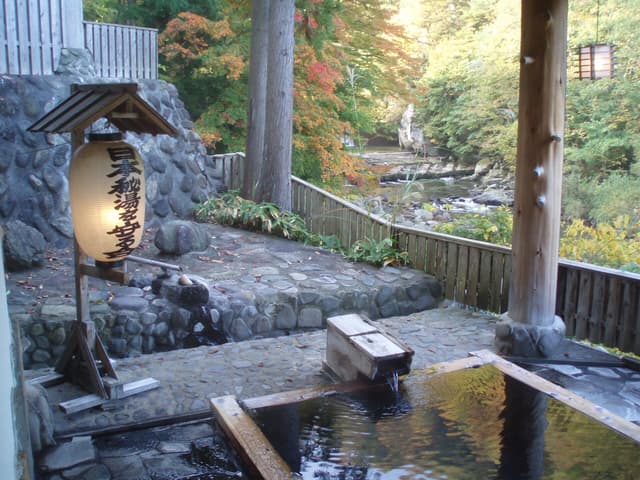
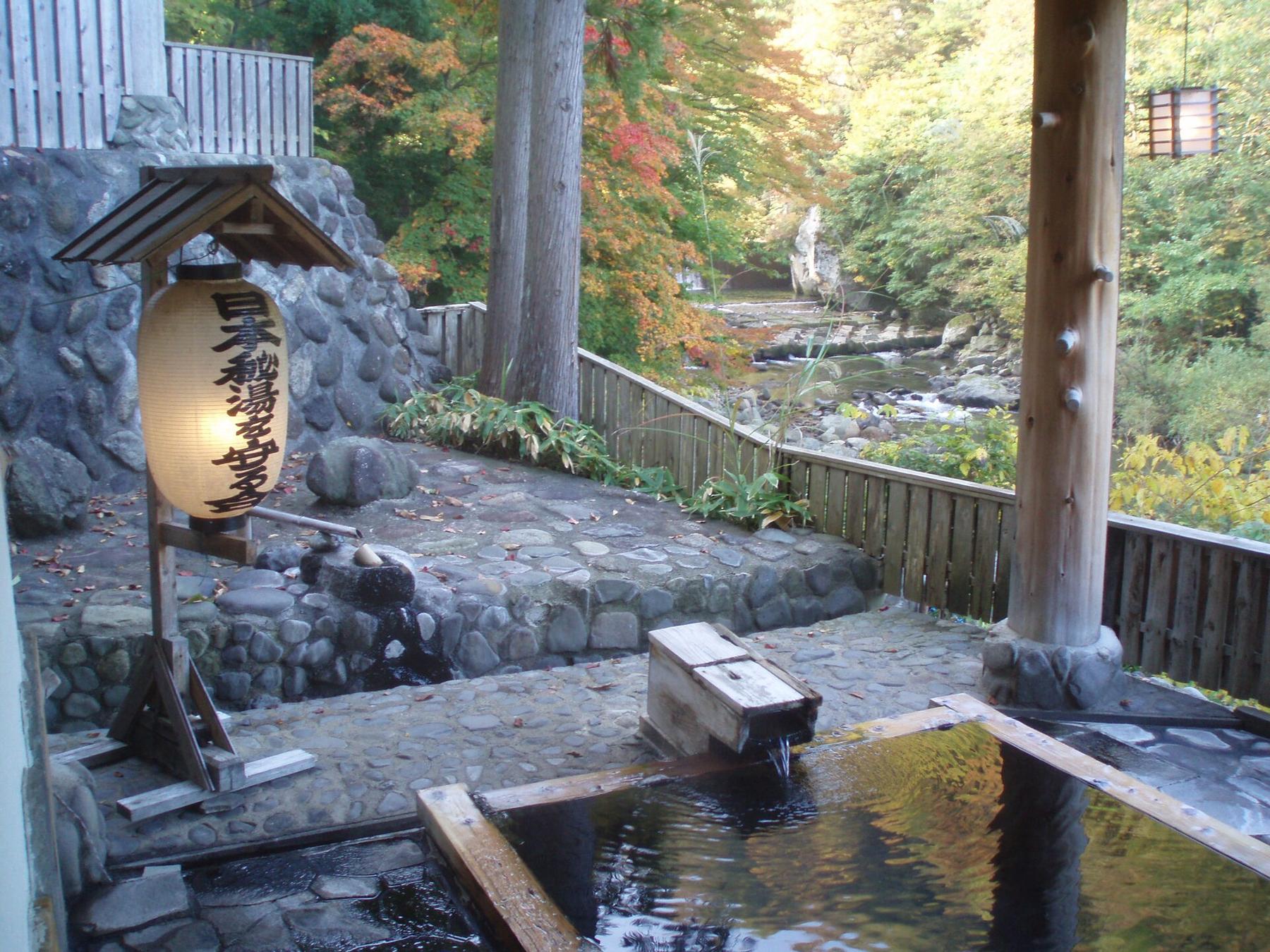
Two routes. Either book a ryokan room that includes its own bath (search terms: "private open-air bath", rotenburo-tsuki), or reserve a kashikiri slot — many ryokan rent their family baths to guests in 45–60-minute blocks, sometimes free, sometimes a few thousand yen. Reserve the slot when you book the room, not at check-in; the good evening times go first. One ryokan night planned this way is worth more than three rushed public baths: One ryokan night or more?
05Onsen etiquette in 60 seconds
Wash and rinse seated at the stalls before entering the water; the towel stays out of the bath (fold it on your head); swimwear is never worn; tie long hair up; hydrate, and keep first soaks under 10–15 minutes. Tattooed or not, these five habits are the whole of onsen manners — everything else is atmosphere.
06Onsen and tattoo FAQ
Are tattoos illegal in Japan?
No. Having tattoos is entirely legal; entry rules are private house policies, mostly at baths, pools, gyms and some beaches.
Do small tattoos really need covering?
At a bath that bans tattoos, yes — size rarely changes the rule. Skin-tone cover stickers from Don Quijote or Amazon Japan handle small pieces; apply to dry skin before entering.
Will a hotel's large bath admit tattoos if my room was expensive?
Room rate has no effect. Check the "large bath" policy line specifically — hotels state it — and default to in-room bathing when unclear.
Can families or couples bathe together in a private bath?
Yes — that is exactly what kashikiri baths are for, and they solve mixed-gender bathing at the same time as tattoos.
Is it rude to ask staff whether my tattoo is acceptable?
Not at all. Asking at booking ("I have a tattoo — is the large bath acceptable, or is a private bath available?") is normal and appreciated; it is walking in uncovered that causes the awkward scene.
What about onsen day-use without staying overnight?
Many ryokan and super-sento sell day-use tickets, and some sell day-use private-bath slots — the same booking-ahead advice applies.