QUICK ANSWER
What matters first.
Go independently if you hold a rail pass, want to set your own time at the Peace Memorial Museum, or plan to stay overnight. Take a guided day trip if you are travelling without a pass, want the ferry and transfers handled, or are nervous about a tight return connection at the end of a long day.
- Go independently if you hold a rail pass, want to set your own time at the Peace Memorial Museum, or plan to stay overnight. Take a guided day trip if you are travelling without a pass, want the ferry and transfers handled, or are nervous about a tight return connection at the end of a long day.
- Shinkansen out: 1.5–1.7 hours
- Peace Memorial Park and Museum: 2 hours to do it properly
- Tram or train to Miyajimaguchi: 25–70 minutes depending on which you take
EDITORIAL DECISION
The choice, before the detail.
Travellers who want one realistic day out with a clear route and an honest stopping point.
You want to cover every secondary sight or strongly dislike an early start.
Check the day’s first and last connections, weather and any reserved segment before leaving.
Hiroshima: tour
or train

Hiroshima from Kyoto or Osaka is a long day whichever way you do it. The question is whether you want to spend that day managing three connections and a ferry, or hand the whole route to someone else.
See live departure dates and today's total before the popular slots go.
FROM US$107.10CHECK TOUR PRICE · Compare a guided Hiroshima and Miyajima day trip on Klook ↗Hiroshima from Kyoto or Osaka is a long day whichever way you do it. The question is whether you want to spend that day managing three connections and a ferry, or hand the whole route to someone else.
TL;DR: Go independently if you hold a rail pass, want to set your own time at the Peace Memorial Museum, or plan to stay overnight. Take a guided day trip if you are travelling without a pass, want the ferry and transfers handled, or are nervous about a tight return connection at the end of a long day.
01The day is longer than people expect
From Osaka the shinkansen reaches Hiroshima in roughly 90 minutes; from Kyoto it is closer to 100. That sounds manageable until you add the rest.
A realistic independent day looks like this:
- Shinkansen out: 1.5–1.7 hours
- Peace Memorial Park and Museum: 2 hours to do it properly
- Tram or train to Miyajimaguchi: 25–70 minutes depending on which you take
- Ferry to Miyajima: 10 minutes, running frequently
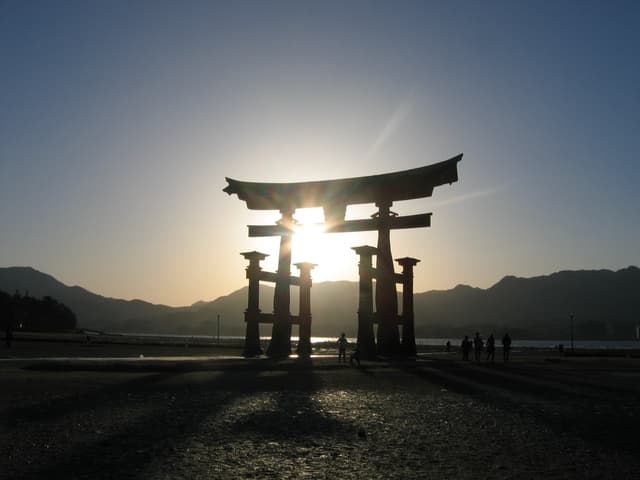
- Miyajima itself: 2–3 hours for the shrine, the torii and the town
- Return the whole way: 2–2.5 hours
That is a twelve-hour day from a Kyoto hotel, and it only works if nothing goes wrong. Both halves are worth seeing, but they are not a relaxed pairing.
02What the two options actually cost
- Independent
- ¥22,000–24,000 return by shinkansen from Osaka, plus entries and ferry
- Guided day trip
- Roughly US$100–110 per person
- Independent
- Nothing beyond the train
- Guided day trip
- Transport, ferry, guide, and often the shinkansen leg as an option
- Independent
- Yours
- Guided day trip
- Fixed, with set times at each stop
- Independent
- You manage the last train
- Guided day trip
- Handled
| Independent | Guided day trip | |
|---|---|---|
| Typical cost | ¥22,000–24,000 return by shinkansen from Osaka, plus entries and ferry | Roughly US$100–110 per person |
| Included | Nothing beyond the train | Transport, ferry, guide, and often the shinkansen leg as an option |
| Pace | Yours | Fixed, with set times at each stop |
| Return risk | You manage the last train | Handled |
Figures were checked in August 2026 and are approximate.
The comparison surprises people: because the shinkansen fare is high, a guided trip is not the expensive option here. It often lands close to what you would pay to travel independently, and it removes the transfers.
That changes completely if you hold a rail pass. With the shinkansen already paid for, independent travel drops to the cost of entry tickets and the ferry, and the tour stops making financial sense.
03When independent is clearly better
You hold a rail pass. The single biggest cost is already sunk. Use it.
The museum matters to you. This is the strongest argument. The Peace Memorial Museum is not a place to be moved through on a schedule, and a tour will give you a fixed slot whether or not you are ready to leave. Many visitors want longer than a group itinerary allows; some want considerably less. Either way, that is a decision worth keeping.
You want to stay on Miyajima. The island is a different place after the day visitors leave, with the tide out and the shrine lit. That requires an overnight and no tour will give it to you.
You are flexible about weather. The torii and the shrine are much better at high tide, and the tide table does not care about your itinerary. Independently you can shift the day.
04When a guided trip earns its price
No rail pass, and you want both halves in one day. This is the core case. The tour absorbs the transfers, the ferry ticket and the timing, for roughly what independent travel would cost you anyway.
You are worried about the return. The last useful shinkansen back to Kyoto leaves earlier than most people assume, and missing it at the end of a twelve-hour day is a genuinely expensive mistake. A tour makes that someone else's problem.
You want context rather than plaques. Hiroshima is a place where a guide adds more than usual. Much of what matters is not visible in the park itself, and a good guide fills that in.
It is your only day in western Japan. If this is a single opportunity and you have no margin for a wrong platform, buy the certainty.
05The option most people should consider
Split it over two days and stay one night in Hiroshima.
The city is pleasant in the evening, hotels are cheaper than Kyoto, and the trip stops being an endurance exercise. You get the museum unhurried on the afternoon you arrive, and Miyajima at its best the next morning before the day-trippers land.
If your itinerary has any slack at all, this beats both options above. The one-day versions exist because schedules are tight, not because the day works well compressed.
06The honest verdict
With a rail pass, go independently and take your time. Without one, the guided trip is close enough in price that the transfers and the return connection are worth handing over. With a spare night, do neither and stay over.
Official information: Hiroshima Peace Memorial Museum and Miyajima tourism.
07FAQ
Can you do Hiroshima and Miyajima in one day from Kyoto?
Yes, but it is a twelve-hour day with roughly four hours of travel. It works better from Osaka, and considerably better split across two days with a night in Hiroshima.
Is a Hiroshima day trip worth it without a JR Pass?
The shinkansen fare from Osaka is around ¥22,000–24,000 return, which puts independent travel close to the price of a guided day trip. Without a pass, compare the two properly rather than assuming independent is cheaper.
How long do I need at the Peace Memorial Museum?
Allow two hours. Some visitors want longer and some want considerably less, which is the main reason to consider going independently rather than on a fixed schedule.
Is Miyajima better at high or low tide?
High tide, when the torii appears to float. Check a tide table before fixing the date — this is one of the few sights where timing genuinely changes what you see.
Should I stay overnight in Hiroshima?
If your itinerary allows it, yes. Hotels cost less than Kyoto, the museum is unhurried, and Miyajima early the next morning is a different experience from the midday crowd.